Flore endémique de Madagascar
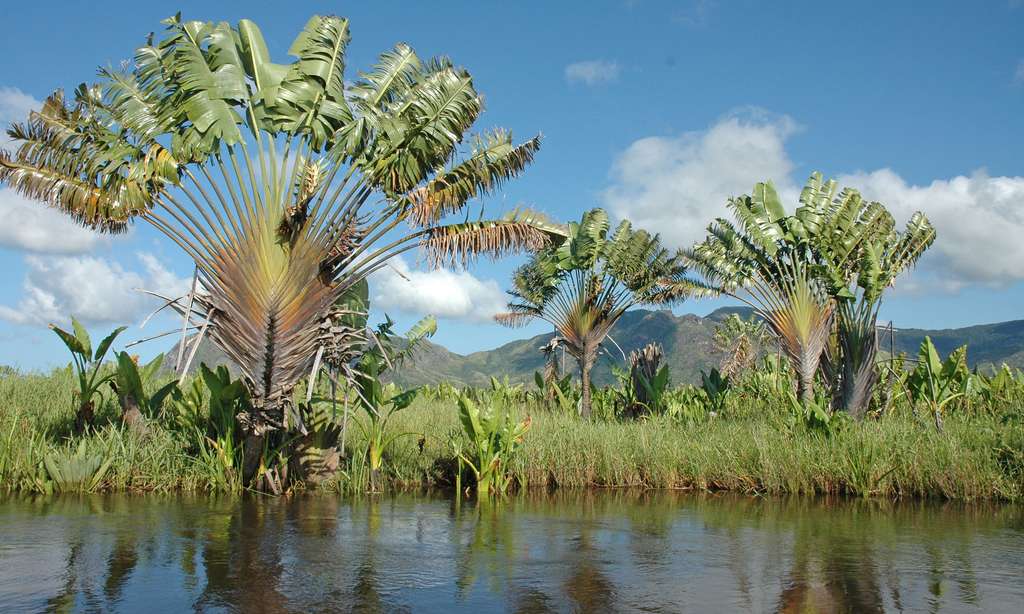
La flore endémique de Madagascar, une richesse naturelle unique au monde.
Madagascar, also known as a green island, is generally endowed with an incomparable generous nature. Formerly attached to the continent of Africa, this island has kept many floristic particularities: fertile lands, very diversified vegetation covering 75% of the island, endemic terrestrial and aquatic species… This framework makes all the beauty of the island and its neighborhood.
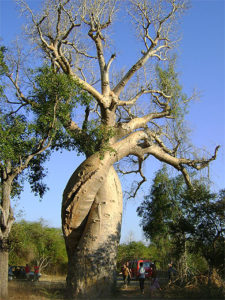
Baobab amoureux
Morondava Madagascar
Sa flore, quant à elle, potentiellement exploitée par les Malgaches, leur offre des avantages par rapport aux autres continents. Son grand privilège est d'avoir accès aux plantes médicinales qui n'existent que dans ses régions. Sa végétation procure des bienfaits à l'organisme tout en le guérissant de toutes les maladies. Il faut aussi ajouter l'utilisation des plantes traditionnelles lors des rites culturels des clans transmis par les ancêtres.
"Le "Ravinala", arbre du voyageur, est l'image perçue du symbole du pays, il est représenté sur le logo d'Air Madagascar et sur la propre monnaie malgache.
Dans une vision simple, sa une terre fertile offre la propriété de pouvoir produire une matière végétale abondante tout au long de l'année. Dans les fermes plus modernes, par exemple, on assiste à une évolution des anciens modes de culture. Notamment vue à Ivato, « la ferme d'Ivato et l'Auberge » pratique la culture de plusieurs espèces de légumes comme les choux, des variétés de fruits à coque, des céréales… Ailleurs, on retrouve la « biodiversité endémique » des plantes comme la culture de orchidées.
Dans une vision profonde de l'île, les visiteurs d'autres pays viennent découvrir les merveilles qui s'y trouvent : de bonnes animations dans les catégories brousse, l'allée « Baobab » d'Antsirabe l'un des meilleurs endroits pour admirer le coucher du soleil, les collines et forêts denses, … Ce paysage majestueux est principalement l'habitat naturel des animaux de l'île.
Accompagnée de son climat semi-tropical, Madagascar parvient à donner vie à tous types de plantes dans ses quatre coins. Sur les côtés, une végétation plus tropicale est dominée par les cocotiers et les palmiers. Cette zone donne à ses habitants la possibilité de cuisiner des plats exotiques : le "ravitoto", une des spécialités malgaches principalement dans sa capitale.
Dans l'île, les guides vous font découvrir la flore des lacs et rivières comme le "Tatamo », la flore de la forêt sèche à l'Ouest avec ses sols siliceux, la flore des Hautes Terres centrales ou des Hauts Plateaux, la flore de la forêt pluviale à l'Est et au Nord-Ouest et la flore des mangroves dans les zones de marée. Cependant, il est nécessaire de protéger le patrimoine naturel des dangers d'une exploitation excessive.
Sur un plan plus professionnel, Madagascar vit de cet atout. En effet, le secteur primaire est le plus dominant de tous ces secteurs. A travers ses richesses, l'île cultive son aliment de base qu'est le « riz » malgache. Elle exporte vers l'extérieur tous types d'aliments et de plantes : l'exploitation de la vanille fait plus de bruit dans la vente de ses produits locaux.
Partez à l'aventure dans la flore tropicale et sauvage de l'île de Madagascar.
Lys Carène ANDRIAMANANTSOA.
Plante endémique du sud de Madagascar
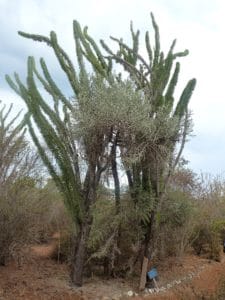
Didierea madagascariensis
Locally called “Sogny”, the octopus tree belongs to the Family Didiereaceae. It is the emblematic species of the thorny forests of southern Madagascar. Endemic to Madagascar, it is a very thorny tree that reaches 6 meters high. It is its ramifications starting from the base which give it the shape of octopus and which are worth its name. Its small leaves and flowers are well protected by the big branched spines.
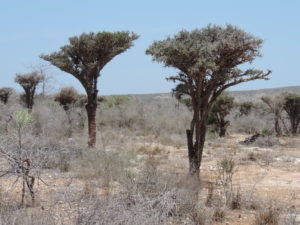
Alluaudia comosa
It is also called the funnel tree. In the south of Toliara “Sonondratrake”. It belongs to the family of Didiereaceae. It is a species which is found only in the thorny forests and on the calcareous ground of the south. This shrub is 3 m high and has a parasol shape. It is well adapted to dryness: its leaves are round, small and succulent (fleshy to better retain water). Because of their small size, its leaves also limit water loss by evapotranspiration.
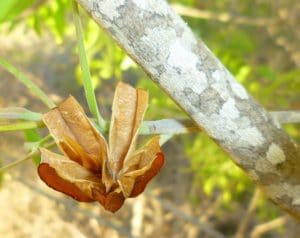
Cedrelopsis grevei
The white mahogany of Madagascar or Katrafay is endemic to the big island and is found in dry and thorny forests. It is a very straight tree reaching 20 m high, whose wood is highly prized in construction (sculpture, cabinet making, carpentry …) while the bark and leaves, fragrant, have medicinal uses. The essential oil from the bark of the Katrafay is commonly used in massage to treat aches and pains affecting the whole body, fractures, muscle pain, arthritis, fatigue and fever. The seeds of Katrafay are flattened and winged, they disperse very easily and grow wherever the wind takes them.
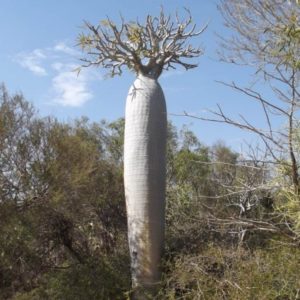
Pachypodium geayi
The bottle tree is one of the jewels of the Southwest. Its local name is “Vontake”. It is endemic to the thorny forest of southern Madagascar. The plant is covered with thorns when it is young, with a tuft of leaves at its top making it look like a palm tree. The adult tree has a straight, pale, very dry, columnar trunk that can reach 5 m high. The tree gets its name from the fact that it stores water in its bulging trunk. It is an ingenious form of adaptation to the scarcity of rain. It is only at the top of the branches that one observes the leaves in the adult plant. Its flowers are white and perfumed. The bottle tree is a superb ornamental tree.
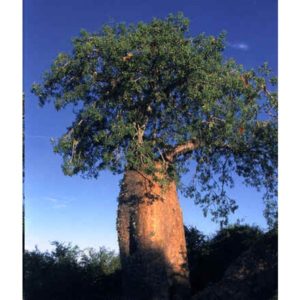
Adansonia rubrostipa
The Baobab “Fony” is one of the 7 species of baobab that exist only in Madagascar and nowhere else in the world. The Baobab fony is the smallest species of baobab. It is 5 meters high and is very remarkable with its massive and bulging trunk in the shape of a bottle which can reach 5 meters in diameter. This species of baobab is found on the southern and western coast of Madagascar. The plant belongs to the Malvaceae family (like the Hibiscus). The flowers are large, very beautiful yellow to red and the fruits are in the form of dry and spherical pods. The fruit is an important source of food for local communities, especially during the lean season. The pulp of the fruit and the seeds are eaten fresh. A Baobab fony of more than 1600 years old called “Baobab grandmother” lives in the heart of the National Park of Tsimanampesotse. It is one of the oldest trees on the planet.
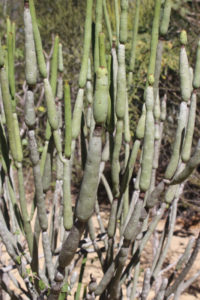
Euphorbia alluaudii subsp. Oncoclada
Also called “Famata”, the Euphorbia sausage is a shrub of the family Euphorbiaceae. It is an endemic plant of Madagascar. It can reach 3 m high and has a coral shape. And what a shrub, it has no leaves. They are absent to limit the loss of water, in the arid environment of the south of Madagascar, ingenious, no? Instead of leaves, it is the branches articulated in sausage strings and green colors that ensure photosynthesis.
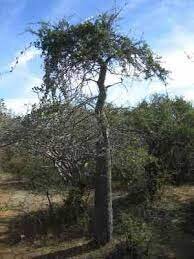
Operculicarya decaryi
This tree, endemic to the thorny forest is the elephant tree. It is locally called “Jabihy”. It is a bush with a bulging trunk and tapered into a cone resembling the legs of an elephant. The small leaves and purple flowers are found at the top of the branches. It is a succulent plant that grows like a natural bonsai in the face of scarce rainfall and poor soil nutrients.
some orchids from Madagascar
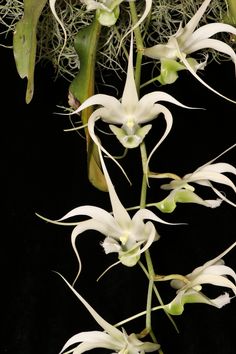
Aeranthes
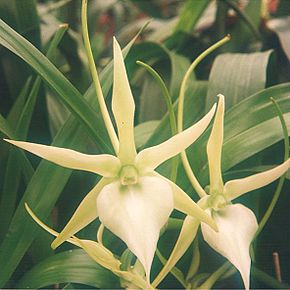
Angraecum
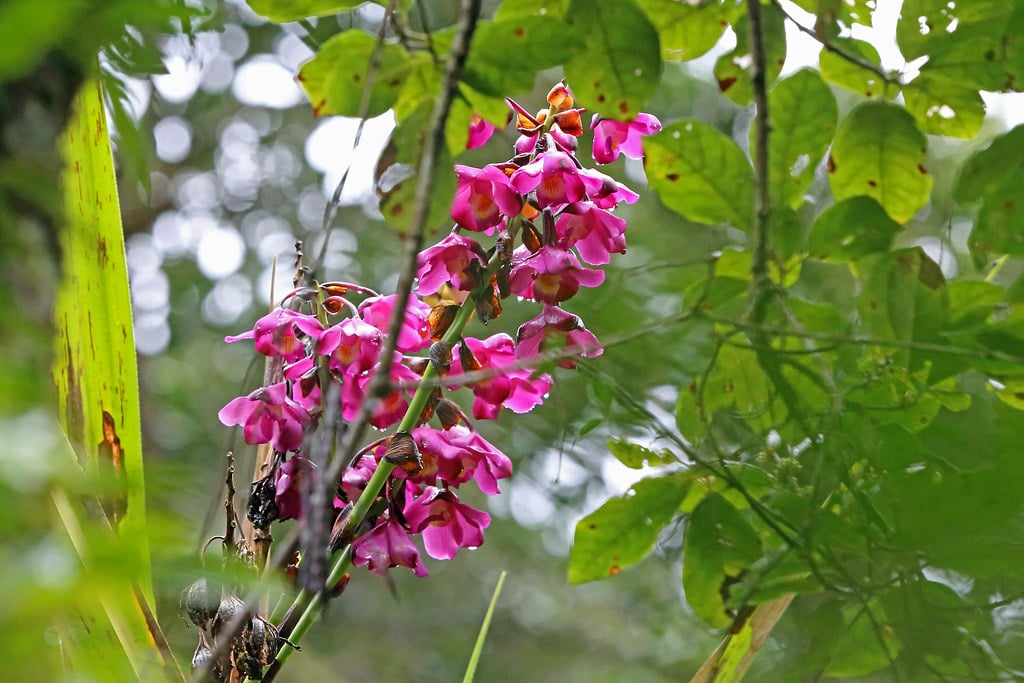
L’Eulophiella roempleriana
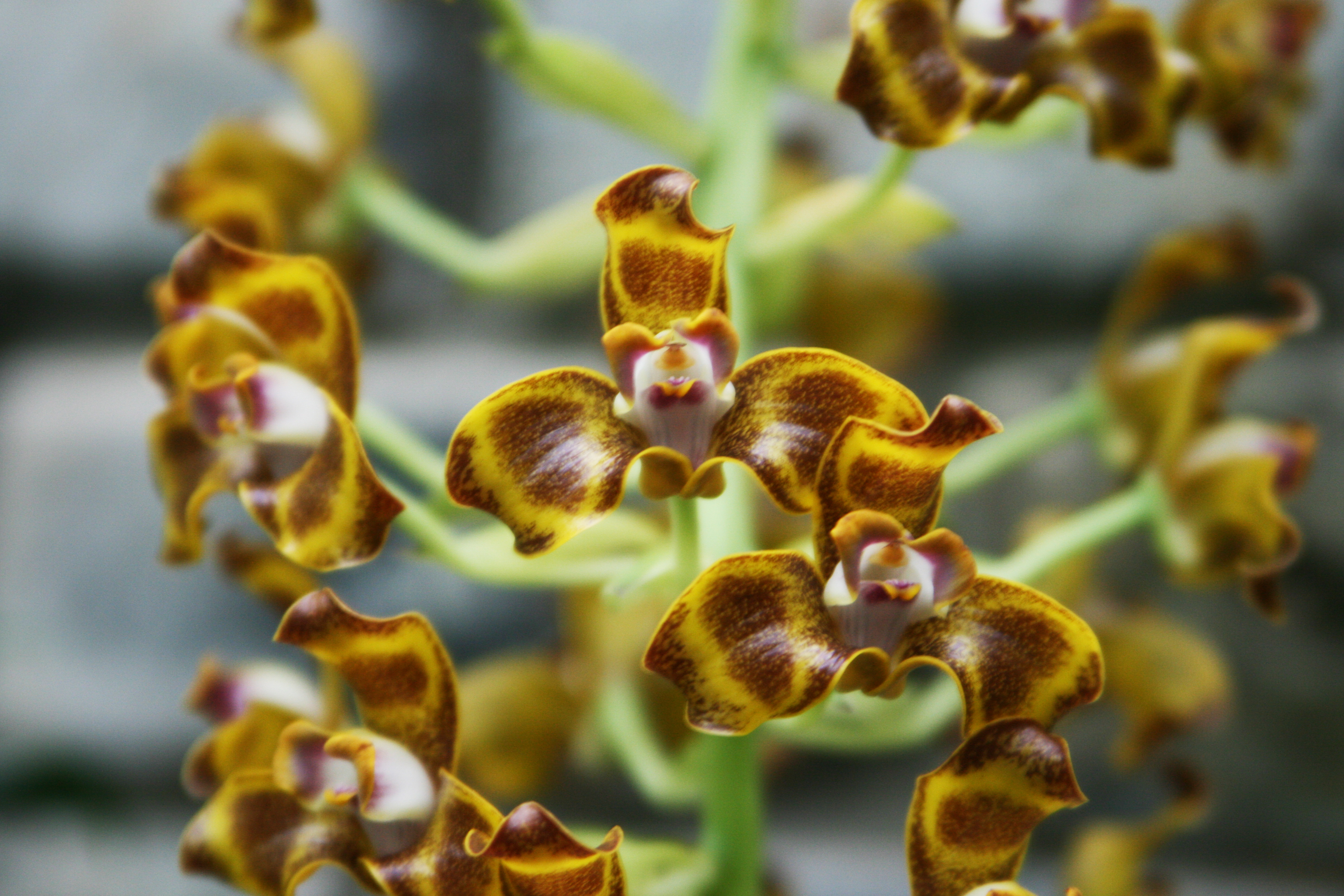
Grammangis